
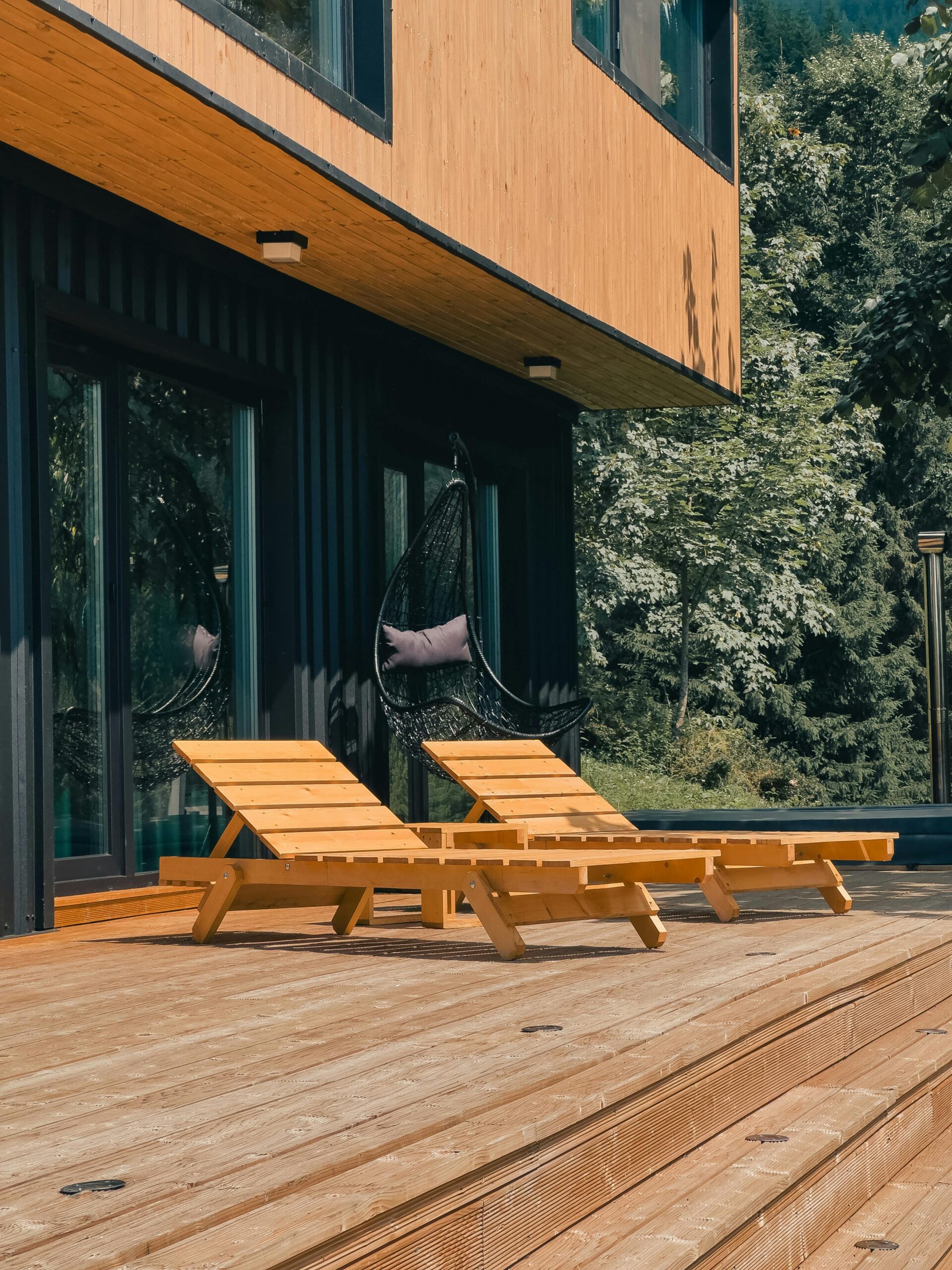
Planning a new deck involves various components, such as the material, layout, railing system, and finish. Each component offers different features; this includes durability and long-term upkeep. At Seven Valley Home Renovations, we make sure homeowners understand the available options so the new installation meets both functional and household plans. Here are four ways to customize installation for decks:
1. Wood and Composite Decking
Traditional wood materials provide a natural appearance, and renovation companies can apply custom stains for decks. Wood provides a natural stain finish that complements a wide range of home exteriors. The stain can be refreshed or changed over time to update the look.
Composite decking offers features like resistance to moisture, warping, and insect damage; it also does not require the same level of annual maintenance as other materials. The reduced maintenance helps offset the investment up front. At Seven Valley Home Renovations, we help homeowners make informed decisions about the materials and their features, helping the deck fit the home in design and aesthetics.
2. Railing System and Selection
Railing selection changes affect the appearance and structure of a deck. Vinyl railings pair with composite decking because they require little maintenance and resist weathering. They are available in multiple profiles and colors, so they can match or contrast with the decking surface. Wood railings provide a traditional aesthetic that suits a stained wood deck. They can be painted, stained, or left natural, giving the homeowner flexibility to adjust the finish later. Metal railings, including aluminum and wrought iron, offer a more modern profile; these materials are an option for multi-tier decks where sightlines and open design are key. The railing system should be treated as a structural element. They also need to meet local building codes for height and load requirements.
3. Single-Level and Multi-Tier Layout
A single-level deck works well for most applications; it may also be easy to build and maintain. A multi-tier deck creates distinct zones within a single structure. One level can be used for dining, another for seating, and a lower platform to serve as a transition into a yard or garden area. Multi-tier decks are more complex to design and construct, and they require more precise planning around how each level connects to the home. If entertaining is a regular part of your household, a larger deck with a multi-level layout offers ways to allocate a renovation. A professional helps plan each tier to its intended function rather than adding levels for visual effect.
4. Finish and Long-Term Maintenance
The finish applied to a wood deck, whether a stain, sealant, or paint, is not a one-time decision. Wood requires resealing or restaining on a regular schedule to prevent deterioration and rot. Skipping this maintenance may shorten the deck’s lifespan and lead to more repairs.
Composite decking eliminates the need for staining; the surface should still be cleaned periodically to prevent mold and debris buildup. Whichever material is used, the connections between the deck and the home, such as ledger boards, fasteners, and flashing, should be inspected regularly. Changes to the finish or layout can also be made when a contractor issues a change order to incorporate modifications.
Plan and Install Decks
Customizing a new deck comes down to making informed choices about materials, layout, railings, and finish. It involves choosing between wood and composite, as well as maintenance and function design. At Seven Valley Home Renovations, our team helps with a wide range of deck projects; we can also review your ideas, provide feedback, and prepare an accurate estimate. Contact our team today to schedule a design and quote consultation for your new deck.